MOBILE APP DESIGN
EWG
Health and wellness app
The Environmental Working Group (EWG) is a nonprofit that empowers consumers to make informed choices through science-backed research.
Out team led a full redesign of EWG’s Healthy Living mobile app and shaped its premium model strategy. The app helps users shop smarter with quick access to ingredient details, health risk ratings, and environmental impact scores across thousands of products.

The project goal
To enhance the overall user experience by modernizing the app’s design, improving core functionality, and streamlining key workflows.
In addition, introduce a paid version of the app that unlocks new revenue opportunities and delivers more personalized value to users.
Our process
A key focus of this project was helping the client define a viable monetization strategy. We applied Neuron’s SPARK methodology—Strategy, Planning, Audit, Research, and Knowledge—with an emphasis on aligning product decisions with sustainable business models and revenue opportunities.
RESEARCH & STRATEGY
Understanding current and untapped audiences
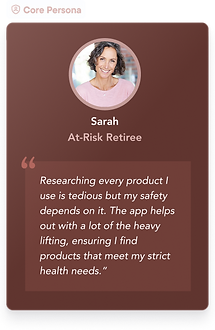
Early in our research, we focused on identifying and understanding existing user types, behaviors, interactions, and pain points with the app.
In parallel, we defined aspirational user types to guide future enhancements and growth opportunities.




Benchmarking the market to inform strategy
We conducted a competitive analysis of health and product scanning apps to uncover product gaps, unmet user needs, and opportunities for differentiation.
We also examined monetization models, including subscriptions, freemium options, and in-app purchases, to identify effective approaches for our target audience and business goals. These insights directly informed product strategy and feature prioritization.
Building the roadmap for what's next
Drawing on insights from our research, we compiled a list of over 45 proposed features, from essential core capabilities to standout differentiators.
This feature set was reviewed collaboratively with engineering, product, and key stakeholders to assess technical feasibility and ensure cross-team alignment.
We then conducted a prioritization exercise to define which features would make it into the MVP and which would be planned for future development phases.


Reimagined Homepage
A tailored and engaging homepage that enhances personalization and product discoverability. Including education and insights, access to lists, curated content, and more.

Simplified Scoring
A more intuitive representation of the scoring system to help build trust and reduce confusion. And the introduction of intra-category score comparison.

Powerful Search & Browse
A robust search is essential as it directly impacts user satisfaction and overall app performance. Allowing users to easily discover new products or quickly find what they are looking for.

Intuitive Product Page
Improved scannability, helping users to find the information they need more quickly, and enabling them to better understand what’s being presented.

Personalized Ingredients
For people with food sensitivities or health concerns this feature helps them to easily find products that fit their needs.

Advanced Scanner
A fast, accurate, and user-friendly scanner to enhance usability, reduce frustration, and encourage users to engage with the app regularly. Additionally, introduce a product comparison feature.

Enhanced Lists
Added functionality such as shopping lists, list collaboration, and real-time updates, making the feature more customizable, collaborative, and aligned with the unique needs of users.

Easy Product Submission
Simplifying the submission process and providing immediate feedback will encourage users to contribute more frequently and consistently.

Community & Advocacy
Introduce community features that foster user engagement, empowering individuals to make an impact, and building a sense of collective responsibility.

Introducing a premium monetization model
We introduced a premium tier while keeping core features free, creating a better user experience and generating sustainable revenue for EWG’s app maintenance and ongoing research.
To validate this strategy, we analyzed user motivations, market trends, and competitor models. We also conducted two surveys—Willingness to Pay and Price Sensitivity (Van Westendorp model)—with both current users and non-users. These insights informed which features to include in the premium tier and how to price them effectively.
Gauging user demand and payment intent
We introduced a premium tier while keeping core features free, creating a better user experience and generating sustainable revenue for EWG’s app maintenance and ongoing research.
To validate this strategy, we analyzed user motivations, market trends, and competitor models. We also conducted two surveys—Willingness to Pay and Price Sensitivity (Van Westendorp model)—with both current users and non-users. These insights informed which features to include in the premium tier and how to price them effectively.

Additional study observations:

Perceived Value
Existing users set a higher bar for premium offerings, while non-users are more open to paying but need education on the app’s unique value.

Demographics
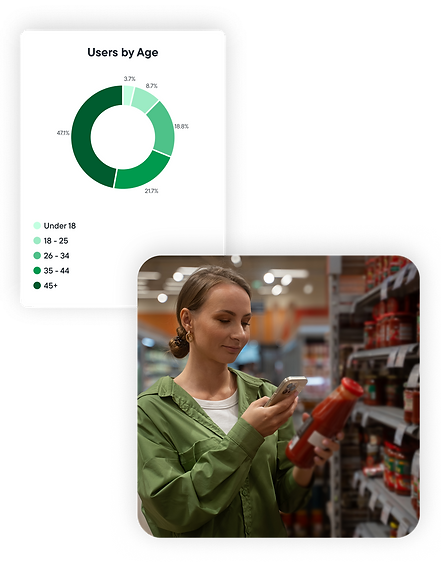
Existing users are older, wealthier, and health-conscious. Non-users skew younger, are more price-sensitive, and represent growth potential.

Advocacy & Awareness
Existing users are more likely to advocate for healthy living, showing strong alignment with the brand’s mission.

This study underscored the strong alignment between the proposed app's features and user needs.
Determining the optimal price point
Once the feature set was defined and initial designs completed, we conducted a price sensitivity study using the Van Westendorp model to better understand users’ perceived value and acceptable price range.

APP DESIGN
The premium features
The premium model design covered key strategic touch points, including promotional and informational premium tiles and paywall triggers.
It also used visual elements like premium badges, locked states, and other indicators to clearly distinguish premium content throughout the app.


The feature allows users to compare two products side by side, either by browsing or scanning a barcode. Each comparison presents a clear view of product scores, ingredients, health concerns, nutritional values, certifications, and more.
Each product contains contextual calls to action, such as buying, adding to a list, or learning more, to help reduce friction and support confident decision-making.


Multi-product comparison
Neuron proposed and designed this feature from the ground up, as it was not available in the current Healthy Living App offering or among competitors.
Our user research revealed strong demand for this capability, positioning it as a key differentiator for the premium tier.

Personalized ingredient preferences
As a key differentiator for the premium tier, this feature brings meaningful personalization to the app experience through user-defined ingredient preferences:
-
User can select their preferences, choosing to avoid or favor certain ingredients.
-
When viewing individual products, flagged ingredients are clearly highlighted.
-
During search, results reflect the user's preferences to support faster, smarter decisions.
This feature lays the foundation for a more personalized experience in both the current app and future iterations.
By capturing user preferences, it enables tailored content, recommendations, and interactions. This creates a strong base to expand personalization over time and increase relevance and value for each user.


The core experience
Maintaining free access to existing core features was a key part of the strategy, but just as important was the commitment to improving and modernizing the overall experience. We reimagined core functionality, introduced essential new capabilities, and put user experience at the center of every design decision.


The impact
The redesigned experience empowers consumers with the tools and information they need to make confident, informed decisions that support their health and well-being.